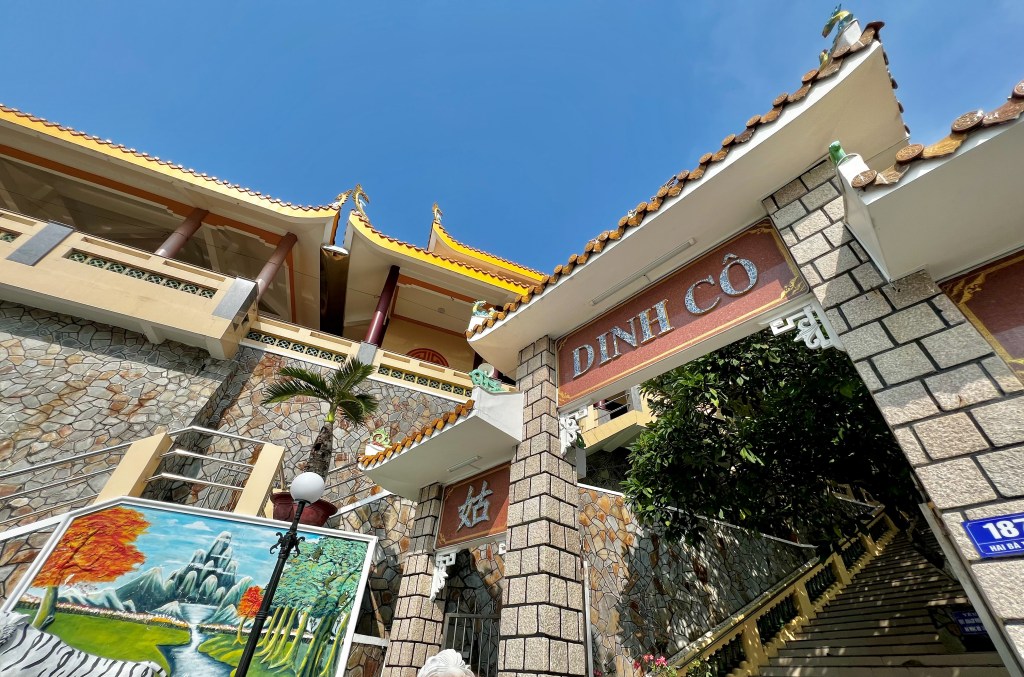
Lately, I had a short visit to Dinh Co. And here is a blog about my thoughts
Bà Cô (Lê Thị Hồng)
Dinh Co was initially built in the 18th Century to worship a young Goddess called Le Thi Hong.
According to the local tale, she was from Tam Quan, Binh Dinh, a province in central Vietnam. On a voyage, her ship was caught by a heavy storm and unfortunately, she passed away. Days ago, she had just turned 16. Her corpse was found days later on the coast of Long Hai.
Instead of being rotten, the locals described her as “looking like she is still alive” and around her was a comfortable smell, almost like flowers.
The locals buried her on Cô Sơn hill, where they later built her a small place of worship. After that, she always appears during thunderstorms to guide the fishers to safety, help the locals through epidemics, etc. The people here absolutely appreciate it and called her “Long Hải Thần Nữ Bảo An Chánh Trực Nương Nương Chi Thần” (The Small Goddess of Long Hai Who Protects The Good).
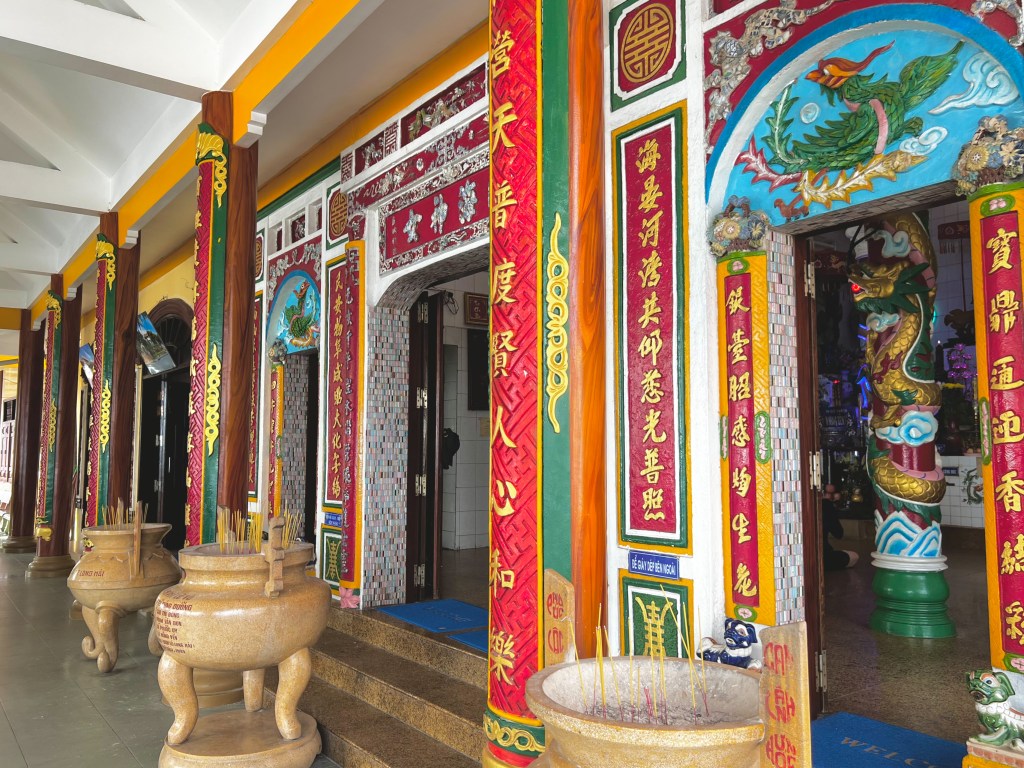
In 1930, her small place of worship was moved up to Kỳ Vân hill, where the temple is located today. In 1987, a big fire destroyed parts of the temple, later the temple was restored. The latest restoration was in 2006.
The statue of the goddess is in the main worship room. The locals dress her in a big yellow cape with sparkly gems and illustrations of dragons, phoenixes, and a variety of local flowers. On her head, there is a big red traditional hat.
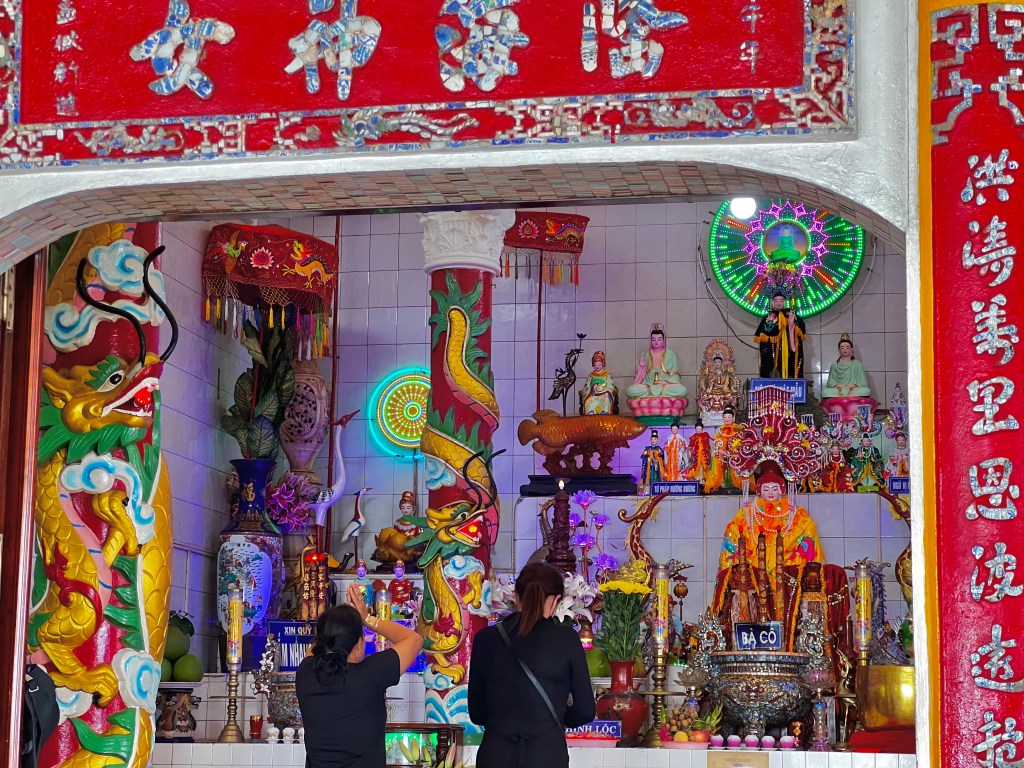
The worship statue is labeled “Bà Cô”. In Vietnamese, it can be translated word by word into “Lady Miss”, because Bà is a pronoun referring to an old lady and Cô is also a pronoun referring to a young lady. People have different names for worshipping her and her real name is usually not mentioned.
Besides the Bà Cô statue, the locals also worship other gods and even the Bodhisattva.
Cá Ông (Whales)
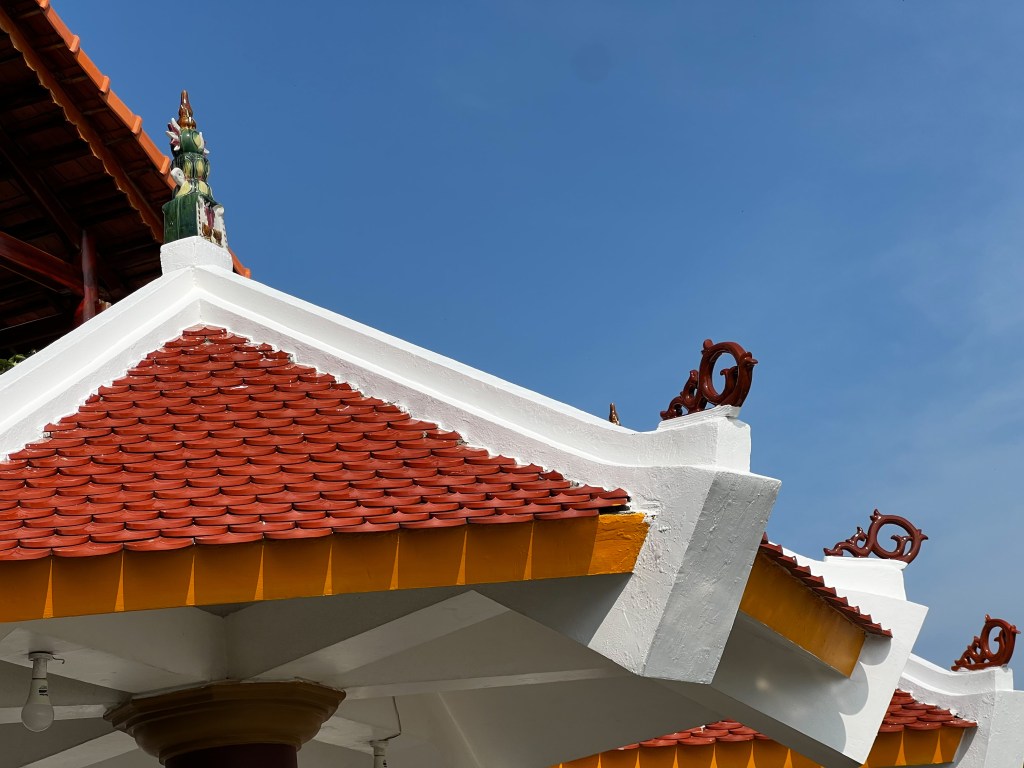
At Dinh Cô, the symbols of whales can be seen implemented onto the roof tiles decoration of the shading for the seats facing the beach.
In the Central and Southern provinces of Vietnam, the whales are formally called Cá Ông (Grand Fish). According to local traditions and chronicles, the whales were often seen guiding, and pushing fishermen’s boats into safety when they were caught in thunderstorms.
There are many explanations for this, both spiritual and scientific. According to an ancient tale, in the far south of the country, there was a happy living family of a lovely couple and their baby. Their usual days were: the husband sailed to the sea and later came back in the morning. However, on a gloomy morning, the wife woke up to the news that her husband had gone missing in the storm. Felling extremely sorrowful and impotent, she decided to sail into the vast ocean herself and was also got caught in a storm. Her small ship was rocking left and right, on the brink of sinking when a large whale came and lifted her up and back to the shore. It was said to be her husband’s spirit, which transformed into a whale to help the other.
The whales or Cá Ông appeared in many tales and are worshiped by fishers.
As a scientific explanation, whales when caught inside storms they usually find a floating thing to push themselves off the waves to escape the gusts of water that flows to the coast and risk them getting stuck there.
Dragons and other mythical creatures
The dragons here I want to designate is the ones on the edges of the roof. At first glance, I thought these dragons are styled like a 10th to 13th century Vietnamese dragon, according to their winding bodies. After researching on the topic, I can confirm that these are none of the Vietnamese ancient dragons, these are too weirdly shaped with an over saturated lower lip.
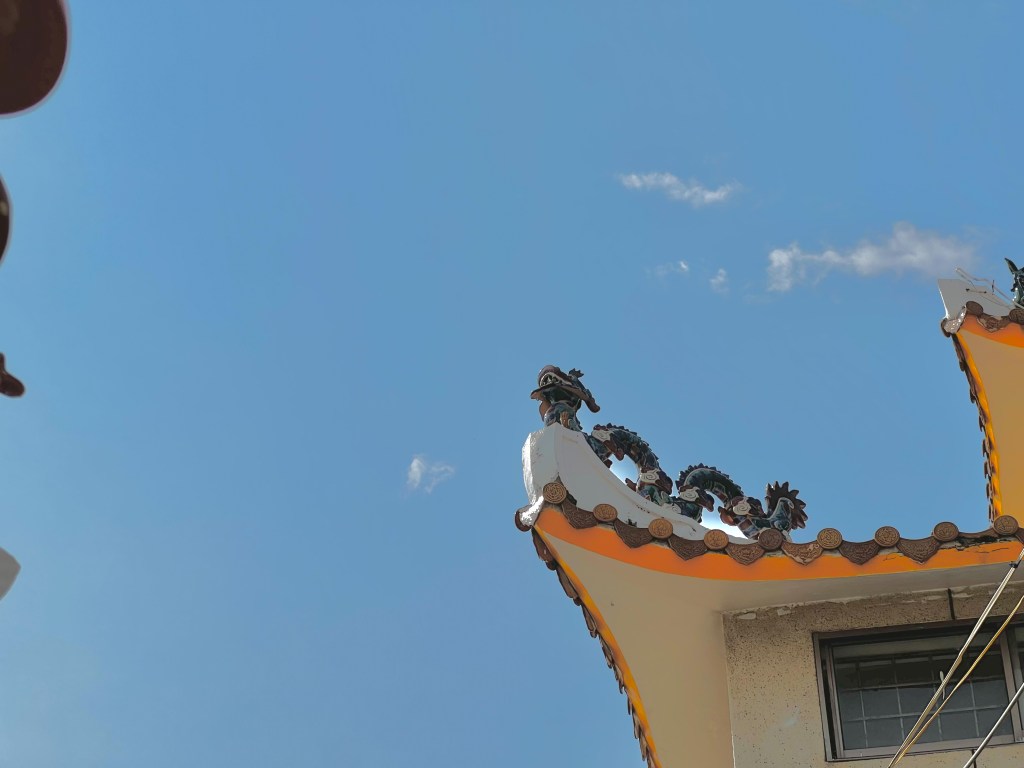
In fact, with the old temple, dragons were no where to be seen. Instead, there were creatures that seemed to be monkeys. And surprisingly, monkey figures are no where to be seen on the new temple and instead we have dogs, and phoenixes, and abstract curves.
A look back in time with an architectural eye
The Dinh Co temple didn’t use to look like this. Back in 1930, the temple was rebuilt and it looked somewhat similar to what we have today. But honestly, on my short trip there, I didn’t really appreciate the current architecture.
Although people have really tried to replicate the old temple with the dragons and Âm Dương roof tiles, the temple now still seems to be a bit off in some way. With many major restorations and some more minors, the temple is now standing with architecture looking like a salad. The main lobby which outlooks the Long Hai coast is now installed with cheap plastic windows, the tiles in the main worshipping room are white, and it looks like a bathroom wall. There are so much more restorations that make me think “what the heck they are even thinking?”, things are halfway done with cracks and poorly-chosen paint, platforms are built with no core purpose in mind and so much more.
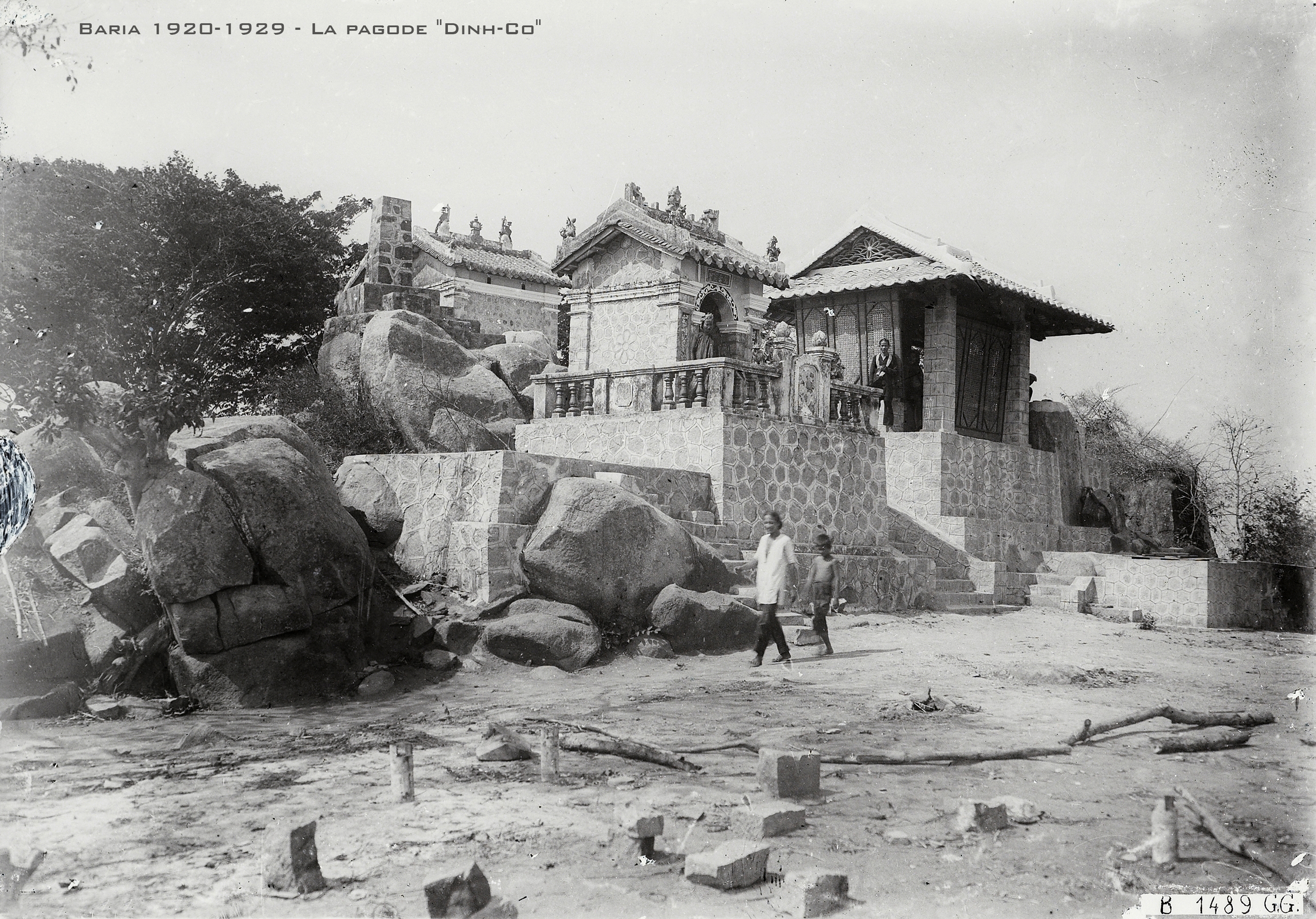
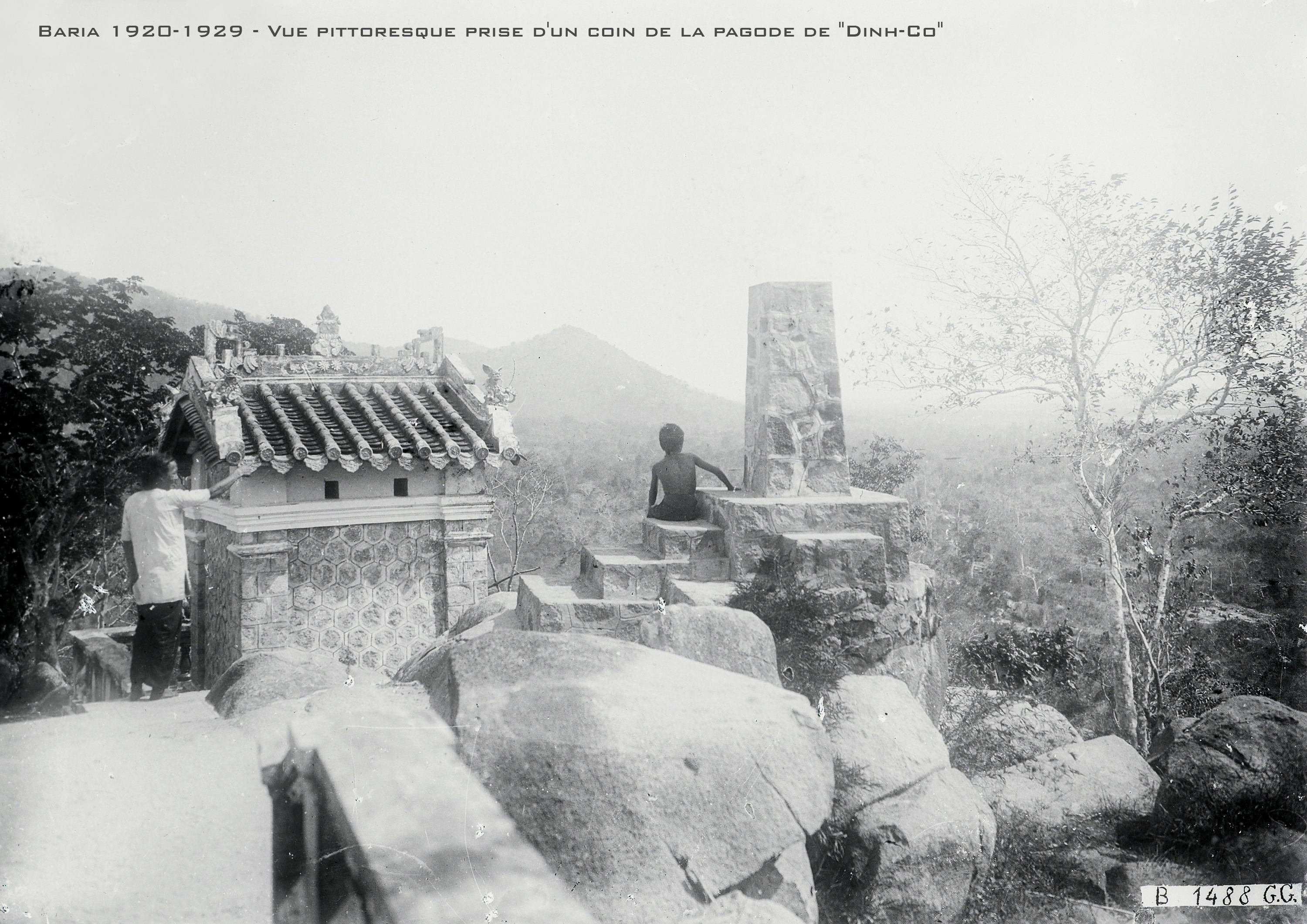
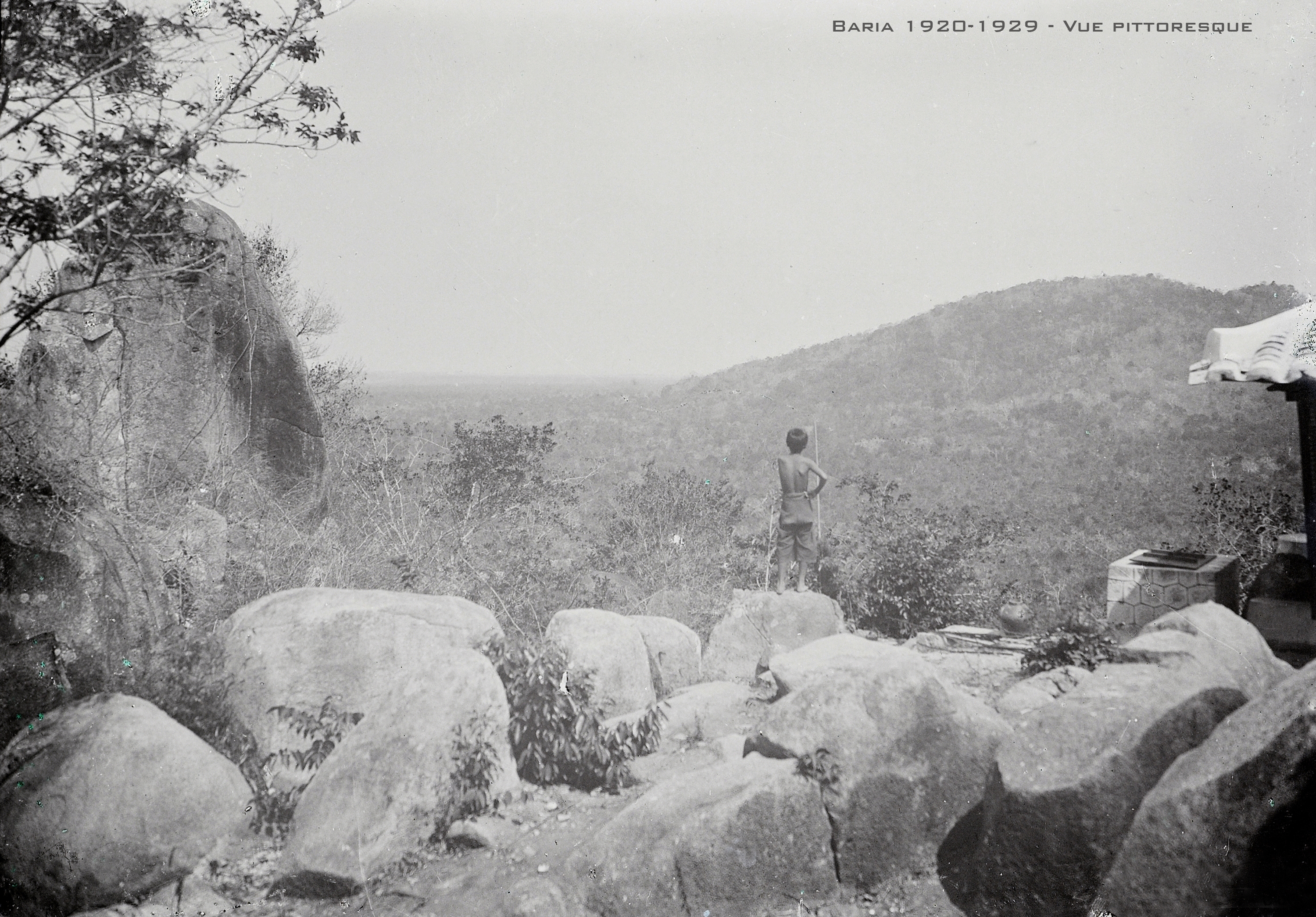
Recently, I found some old photos taken in 1920-1929 when the old temple was still standing, uploaded by the Flickr user manhhai. The old temple actually consisted of about 3 smaller temple, there was a label written in Mandarin characters but with the current resolution I found, there is no way I can use Google Translate for that, so I would really appreciate it if anyone could translate it. Looking at the temples’ fundament, I can see that it is made by combining large stones and cement. The special thing here is the rocks seen from the behind from the center temple seemed to be cut in almost perfect hexagons (just a little reminder that Long Hai back then was nowhere, and Vietnam was at war with a corrupted government). The figures of dragons and mythical creatures on top of the temples seemed to be carefully made with detailed patterns.
The only inspiration I can see people take from the past is the Âm Dương roof tiles and those balustrades on the way up to temple.
The pictures I found have do not very good contrast which made identifying the distance from the beach quite hard. However, by playing with the contrast slider, I can somewhat know that the temple was quite far away from the beach, unlike the temple today, it is right at the beach. Also with the angle to the mountain, the old temple was probably on higher grounds than it is today. But nothing is assured, I am still skeptical about my conjecture because, on the old map of Baria, the coastline was wider than it is now, a possible explanation for this is coast erosion, because I myself also have lived here, in Long Hai, and I can confirm that in just months, the sea can bring a 50m coastline away.
A turn down for cultural and architectural aspects
I recognize the effort of trying to implement Vietnam cultural background into the temple rebuilding, however, it doesn’t result in a positive way. The temple has lost its own unique style and culture, but people have somehow merged the temple into the majority.
Thank you for spending your time to read my lengthy rant. And thank you manhhai for those photos, they are very valuable to me.


 Onoma Blog
Leave a comment